ADAS Calibration & Target Aiming in San Tan Valley & Greater Phoenix, AZ
A forward camera aimed one degree off looks about 1.7 feet to the side of its target at 100 feet, enough to confuse lane keeping. Shop Buddy Mobile Diagnostics provides ADAS calibration and target aiming in San Tan Valley, AZ and Greater Phoenix, covering cameras, radar, and the driver-assist systems that rely on them.
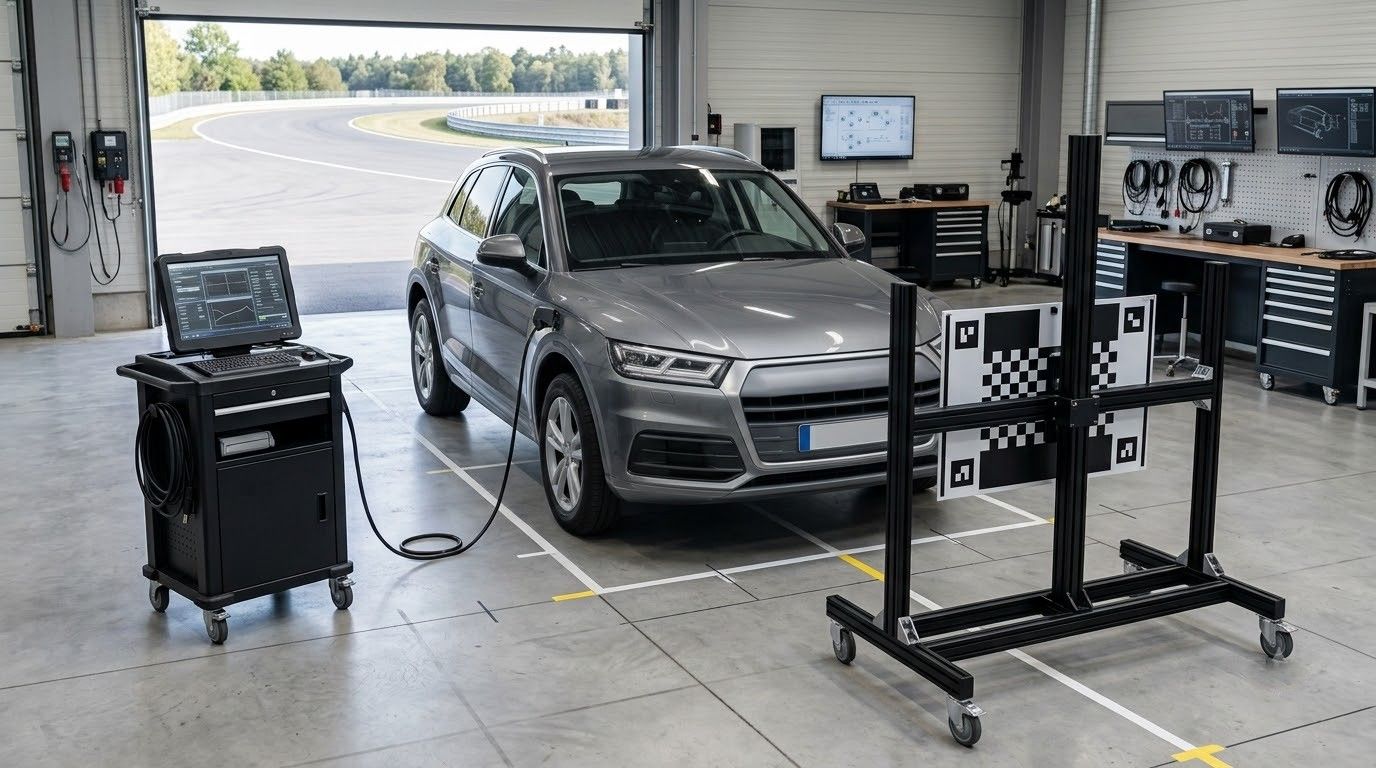
Calibration is required after many common repairs, including windshield replacement, wheel alignment, suspension work, bumper or grille repair, and collision damage. Static calibration uses manufacturer targets placed at measured distances and heights on a level surface, while dynamic calibration is completed by driving the vehicle under specific road and speed conditions.
Our work is led by an ASE Master Automobile Technician with 35+ years in automotive repair, and every calibration follows the manufacturer's published procedure. We confirm ride height, tire pressure, fuel level, and alignment first. Book ADAS calibration at your repair shop or glass shop through our contact page.
ADAS Calibration & Target Aiming
Forward Camera Calibration
The camera behind your windshield reads lane markings, signs, and vehicles ahead. After glass replacement or bracket work, it must be aimed again. We set the manufacturer targets at measured distances and complete the camera calibration through the scan tool.
Front Radar Calibration
Adaptive cruise control and collision warning depend on a radar sensor aimed precisely down the road. A slight knock to the bumper or grille can shift it. We align the sensor to the vehicle's thrust line and verify its aim through the routine.
Blind Spot and Rear Radar Calibration
Corner radar sensors watch adjacent lanes and cross traffic behind the vehicle. After bumper repair or sensor replacement, they need calibration to report accurately. We perform the static or dynamic procedure required and confirm the warning indicators respond correctly.
Surround View Camera Calibration
Around-view systems stitch several camera images into one overhead picture. Replacing a mirror, camera, or tailgate can misalign that view. We place calibration mats or targets as specified and recalibrate the system so the image lines up cleanly.
Static and Dynamic Calibration
Some systems calibrate with targets in a controlled space, while others learn on the road at set speeds with clear lane markings. Many vehicles require both. We complete whichever procedure your vehicle specifies and confirm that each step finished successfully.
Pre-Scan and Post-Scan Verification
Calibration starts with a full scan for stored faults that would block the procedure and ends with a second scan confirming every system reports normally. That bookend approach catches problems before they reach the road with you behind the wheel.
Why Choose Us for ADAS Calibration & Target Aiming
Manufacturer Procedures Every Time
Each automaker specifies target sizes, distances, heights, and conditions for its systems. We follow those published requirements exactly, because a calibration done close enough can still leave a camera or radar looking slightly in the wrong direction at highway speed.
Vehicle Prepared Before Aiming
Calibration only holds when the vehicle sits correctly. We check tire pressure, ride height, fuel level, and alignment status first, so the sensor is aimed against the stance and ride height the vehicle actually drives with every day on the road.
Support for Glass and Body Shops
Windshield replacements and collision repairs often trigger required calibrations. We come to glass and body shops, complete the calibration at their facility, and return the vehicle ready for customer delivery with its driver-assist systems working exactly as designed.
Honest About Space Requirements
Static calibration needs a level floor, controlled lighting, and enough clear space around the vehicle. When your shop's bay cannot meet those conditions, we tell you upfront and arrange the work at a suitable location instead of compromising the result.
Static and Dynamic Calibration
A failed calibration sometimes points to a damaged bracket, faulty sensor, or wiring issue rather than aim alone. Because we diagnose electrical and module faults too, we can find the real cause instead of repeating a procedure that cannot pass.
Results You Can Trust on the Road
Driver-assist systems only help when they see accurately. We finish with verification scans and, where the procedure calls for it, a road test, so lane keeping, adaptive cruise control, and braking assistance behave exactly as the manufacturer designed them to.
Keep Your Driver-Assist Systems Seeing Clearly
Lane keeping, adaptive cruise, and emergency braking depend on sensors aimed with real precision. Shop Buddy Mobile Diagnostics calibrates cameras and radar for auto shops, glass shops, and body shops across San Tan Valley, AZ and Greater Phoenix, following manufacturer procedures from vehicle preparation through final verification. If a location cannot support a proper calibration, you will hear that first. Tell us about your vehicle and recent repairs through our contact page to schedule.

FAQs - Frequently Asked Questions
What is ADAS calibration?
ADAS calibration aims the cameras and radar sensors used by driver-assist systems, such as lane keeping, adaptive cruise control, and automatic emergency braking. It ensures each sensor reads the road from the exact position and angle the manufacturer intended.
Do I need ADAS calibration after a windshield replacement?
Usually, yes. Most late-model vehicles with a forward camera mounted behind the windshield require calibration after the glass is replaced, since even small changes in mounting position can shift where the camera looks far down the road ahead.
Does a wheel alignment require ADAS recalibration?
Often. Many manufacturers call for sensor calibration after a wheel alignment, because changing the thrust angle changes where the vehicle travels relative to where its sensors point. The manufacturer's service information for your specific vehicle confirms whether it applies.
What is the difference between static and dynamic calibration?
Static calibration uses targets placed at precise distances while the vehicle is stationary on a level surface. Dynamic calibration happens while driving at specified speeds on roads with clear markings. Some vehicles require one method, while others need both completed.
What happens if ADAS sensors are not calibrated?
Driver-assist features may turn off, display warnings, or act incorrectly, such as steering toward a lane line or braking for nothing. In some cases the systems appear normal while aiming slightly wrong, which is why proper calibration matters so much.
Can ADAS calibration be done at my shop?
Dynamic calibration can happen on suitable roads, but static calibration needs a level surface, controlled lighting, and measured space around the vehicle. When your bay cannot provide those conditions, the work moves to a suitable nearby location.
Do you perform ADAS calibration at glass and body shops?
Yes. Shop Buddy Mobile Diagnostics travels to glass shops, body shops, collision centers, and repair facilities across San Tan Valley, AZ, completing calibrations on site so their customers leave with fully working driver-assist systems after the repair is complete.
How do I know if my vehicle needs calibration?
Shop Buddy Mobile Diagnostics checks the manufacturer's requirements for your vehicle and its recent repairs in San Tan Valley, AZ. Warning lights, lane assist drift, or cruise control faults after repair work are common signs calibration is needed.